
How to Read a Chinese Menu Before Ordering
点菜前怎样读中文菜单
Culture articles use natural Chinese with English support; they are not graded HSK lessons. For graded practice, choose a level in Stories. Examples use modern Mandarin pinyin unless stated otherwise.
中文
朋友都在等你点菜时,菜单上的生词好像变得特别多。先想一个你真正需要回答的问题:你想要主菜、一碗面,还是几个人一起吃的小菜?然后找你最在意的食材。普通菜单上的鸡肉、豆腐等词,可以帮助你先认出熟悉的东西。有些菜名很好听,也有些菜名很有趣,但你可以先弄清楚自己要点的是什么。
菜名可以拆开看
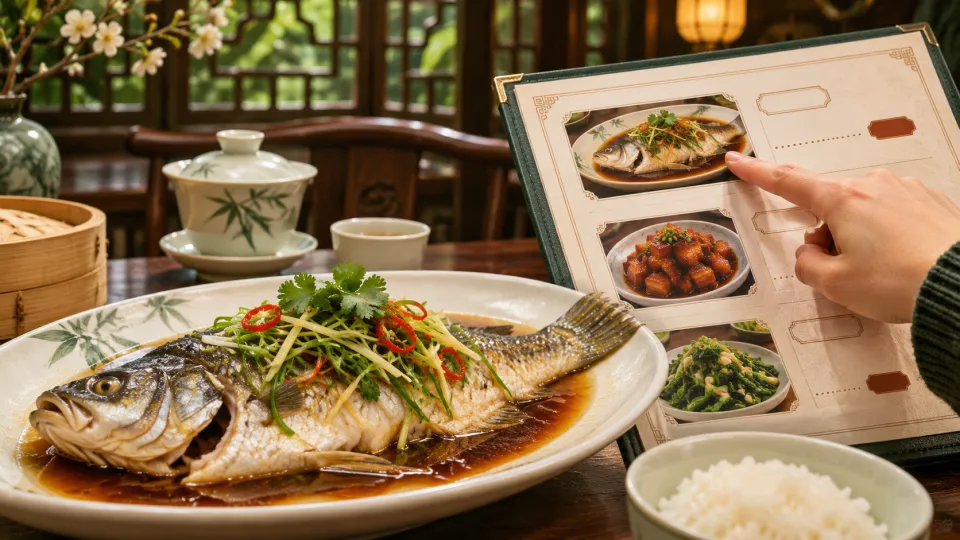
看到清蒸鱼时,可以从最后一个字开始。鱼是食材,清蒸说的是做法。番茄鸡蛋面也可以从后往前读:面是这一碗的主体,番茄和鸡蛋说明了搭配。不是每个菜名都这么透明。如果名字里找不到你认识的食材,可以直接问这道菜是用什么做的,不必把菜名硬翻成英文。
问清楚份量和口味
同一道菜有时会写小份和大份。两个人想多尝几样,可以先问有没有小份。问辣不辣时,服务员可能回答有一点辣,这只说明对方觉得辣味不重。你希望少放辣椒,可以再问能不能少放辣椒。把份量和口味分成两个问题,服务员也更容易给出明确的回答。
把想知道的内容说出来
有时你听懂了菜名,却还不确定里面有没有某种食材。可以用这道菜里有……吗来问,必要时再问酱汁里有没有。菜名只是一条线索,不能告诉你厨房里的每一个步骤。如果只是练中文,也可以先找一张菜单,选出两道你会点的菜,再写下一个你必须问清楚的问题。
例句
这道菜有小份吗?可以少放辣椒吗?
用法说明
一道菜用道来计数,一碗面用碗。问份量时,直接说小份通常就够了。
试一试
在番茄鸡蛋面里,哪个字告诉你这是一碗什么?
查看答案
最后的面。番茄和鸡蛋说明了面里有什么。
English
A menu can feel like a wall of unfamiliar words, especially when friends are waiting for you to choose. Start with a question you actually need answered. Are you looking for a main dish, a bowl of noodles, or something to share? Next, look for the ingredient that matters most to you. On an ordinary menu, words such as 鸡肉 and 豆腐 give you an anchor. A name that sounds elegant or funny can wait until you know what you are about to order.
Break a dish name into parts
Take 清蒸鱼 and read from the end: 鱼 is the ingredient, while 清蒸 describes the preparation. The same trick works for 番茄鸡蛋面. The noodles are the base of the dish, and tomato and egg tell you what goes with them. Some names are less transparent. When you cannot find a recognizable ingredient, ask what goes into the dish instead of forcing a literal English translation.
Ask about portions and flavor
A dish sometimes comes in a small or large portion. If two people want to try several things, first ask whether there is a small portion. An answer like 有一点辣 means the server considers it a little spicy. If you want less chili, ask that separately. Dividing portion size and flavor into two questions makes it easier to get a useful answer to both.
Say what you need to know
Even after decoding the name, you may still need to ask whether it contains a particular ingredient. Use 这道菜里有……吗 and ask about the sauce as a separate follow-up if needed. A name gives you a clue, not a complete account of the recipe. For practice, pick two dishes on a menu and write down one question whose answer would help you decide what to order.
Example in context
Does this dish come in a small portion? Could you use less chili?
Usage note
道 counts dishes, and 碗 counts bowls. 小份 is enough when you are asking about a smaller serving.
Try it
In 番茄鸡蛋面, which character tells you what kind of dish this is?
Check your answer
面 at the end. Tomato and egg tell you what is in the noodles.